Wednesday, August 1, 2018

Bayonne and the Basque Country

Bayonne has long been as much Basque as French, sharing a culture with northern Spain.  The Basque people enjoyed a great degree of autonomy before the French revolution.  They have their own language, crafts, and colors. Later arrivals included Jewish chocolate-makers (They were expelled by the Spanish inquisition)

Basque language and flag:


Basque colors (red and green):


Street markets:


Street scenes, old mingled with new:


We tasted a local specialty:  cider beer in a nice restaurant:

Basque has a unique craft called makhila - elegant sticks take years to make.  We went to visit the workshop.  I guess I am not interested in stick with a hidden weapon.  Continuing on, we visited Espellete, a town that makes the red pepper that flavors Bayonne ham.  A sailor who traveled with Christopher Columbus brought the peppers home to Espelette in 1650.  This is certainly my kind of town, as I am a lot more interested in wining and dining!


Overland to Bayonne, via Auch

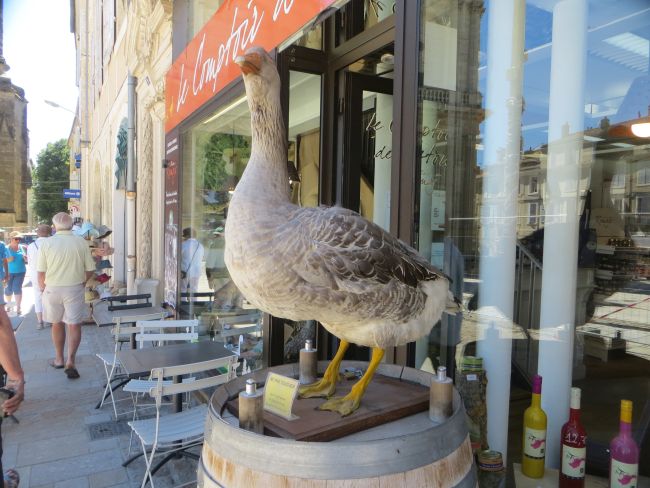
Auch was already settled by the time the Romans conquered this region in the first century BC. It later shifted personality from Roman provincial capital to seat of Catholic archbishops.  Now it is known for its street market, wine, and foie gras.  We had a delightful walk on the street, visited the cathedral to look at the beautiful stained glasses, tasted the wine , and foie gras, and enjoyed a lovely lunch before continue on toward Bayonne.


We were able to see the Pyrenees mountain in a distance.

At a truck stop, we got to see a monument of Tour De France.  What a glorious weather!


Then we arrived Bayonne, where we will stay for three nights.


Tuesday, July 31, 2018

Albi, France

Using Carcassonne as a base, we visited Albi.  Albi is a medieval town with two major attractions: the Cathedrale Ste-Cecile (a 13th century fortress that represents one of France's most monumental Gothic structures; and the museum of the French artist Henri de Toulouse - Lautrec.

Henri was probably best known by his arts on prostitutes.  But his work was far deeper than that.
His physical handicaps gave him particular insight into the souls of  individuals who may live on the edges of life.  He also liked horses and dogs.  I liked particularly his portrait of his Mom:
His self portrait indicated his handicap:
Some other works of his on actors and actresses.


Some scenes in this little town were quite charming: